
Physiological CSTC Circuit

 Physiological Cognitive Control
OXIPASSIVE®
Supporting adjunctive neuro-redox homeostasis to target Cortico-Striato-Thalamo-Cortical (CSTC) pathway hyperactivity.
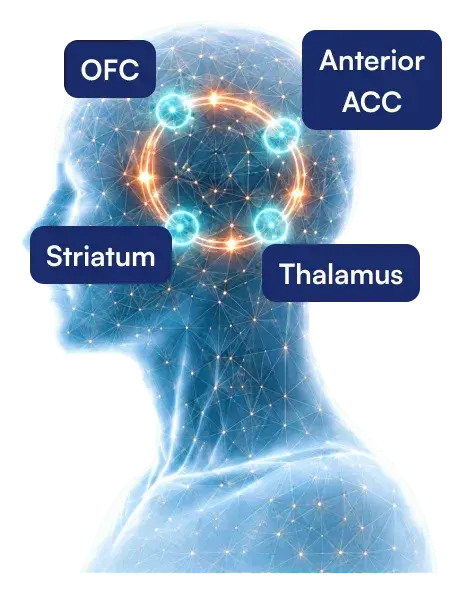
Primary Biological Targets
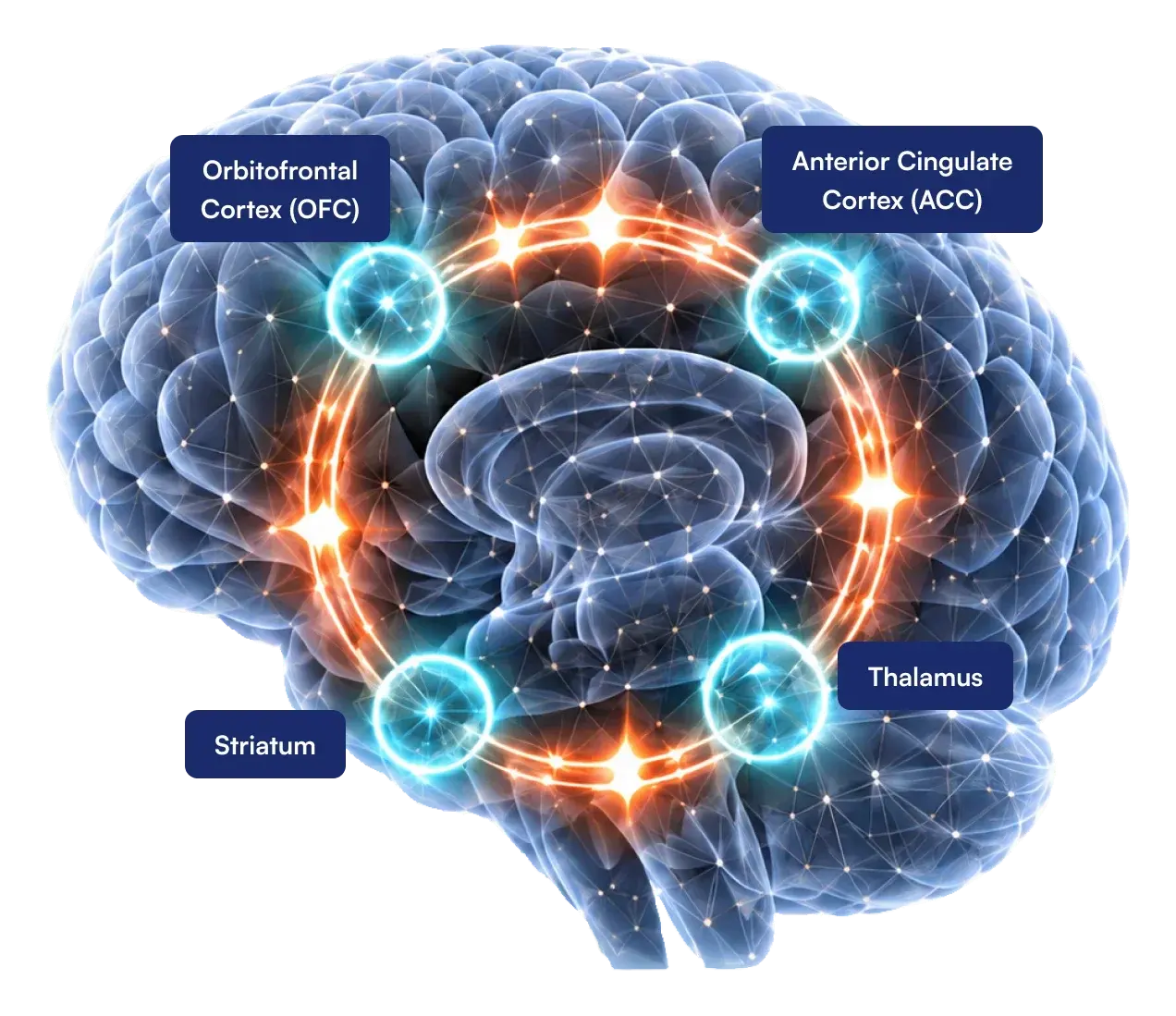
1 - DISEASE BIOLOGY
Physiological CSTC signaling coordinates behavioral inhibition and cognitive flexibility. In patients with OCD, chronic hyperactive glutamatergic signaling triggers a progressive neurobiological dysregulation cascade.
Physiological Cognitive Control
⚠ Loss of Cognitive Control
L-Glutamine Dysregulation Pathway
 ↑ Glutamatergic Dysregulation
 ↓ Endogenous Glutathione
 ↓ Adaptive Neuroplasticity
 Persistent Obsession-Compulsion Loop
2 - PATIENT SELECTION



Adjunctive Neuro-Redox Support
3 - NEURO-REDOX INTERVENTION IN CSTC CIRCUIT DYSFUNCTION
Support of physiological glutamate regulationReduction of CSTC glutamatergic dysregulation Reduction of oxidative neurobiological stressSupport of endogenous neuro-redox homeostasisSupports neural circuit recovery (CSTC function)Supports physiological NMDA receptor functionSupports adaptive neuroplasticitySupports cognitive flexibilityReinforces physiological CSTC signalingSupports neuronal resilience
Persistent CSTC Hyperactivity

Glutamatergic Dysregulation
Obsessions

Compulsions
Oxipassive® (NAC + Glycine)
Adaptive Neuroplasticity
Resilience
Cognitive Flexibility
Support of OCD Management
4 - CLINICAL POSITIONING
Adjunctive Neuro-Redox Platform integrated with standard OCD management.
5 - CLINICAL EVIDENCE DASHBOARD
Evidence Timeline

Emerging evidence suggests that Neuro-Redox modulation may also contribute to improvement of oxidative stress associated anxiety symptoms
Human Neuro Clinical TrialPMID: 37366885

GlyNAC Synthesis Trial